全球罕见度、IUCN 保护等级和鸟种颜值,帮你先挑出最值得后期的照片。Global rarity, IUCN status and species appeal help you find the shots most worth editing.
在结果浏览器把排序方式改成 罕见度,最稀有的鸟排在最前面。
Set the Result Browser’s sort order to Rarity to put the scarcest birds first.
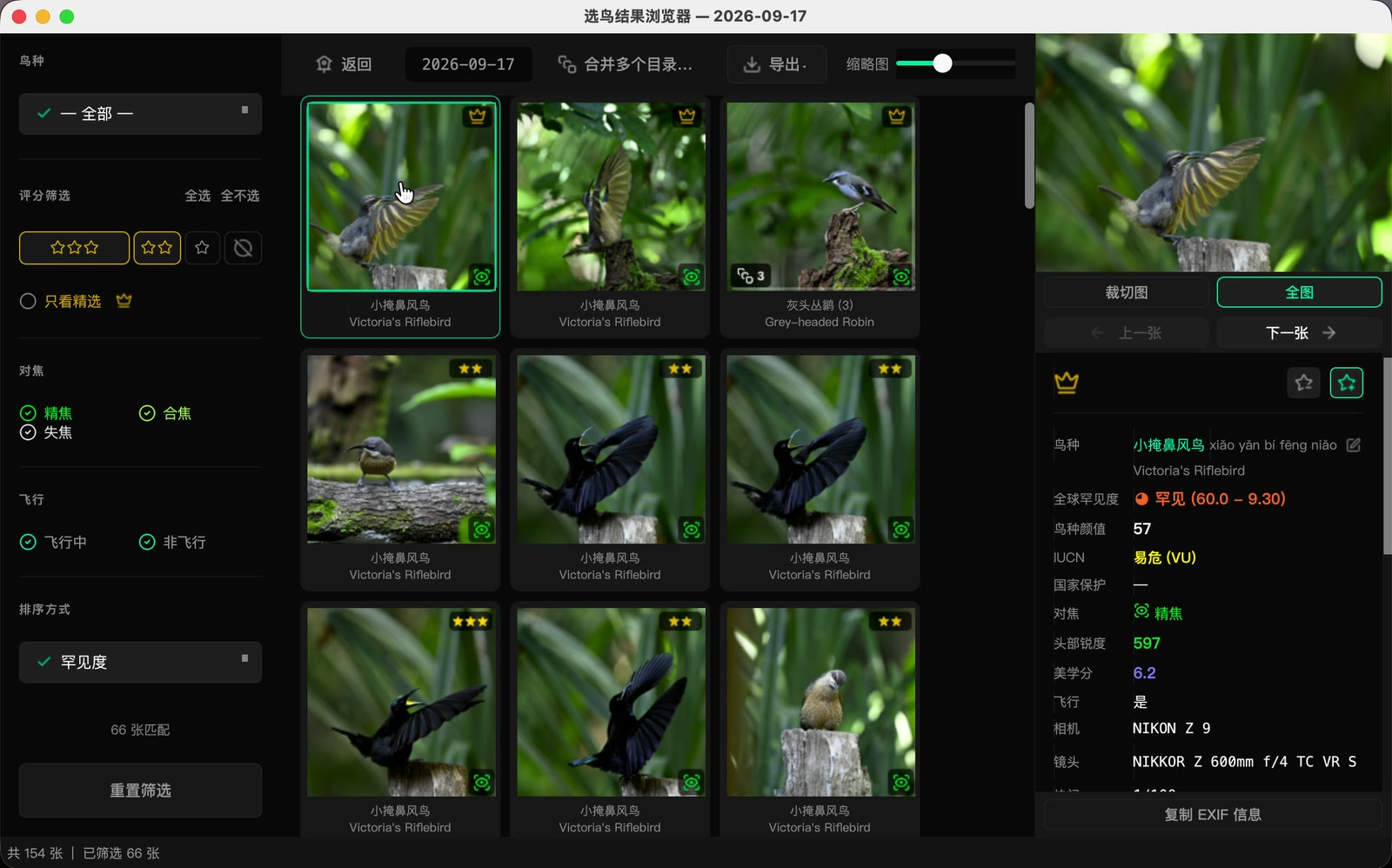
全球罕见度根据 全球鸟类观察记录 计算,记录越少分数越高,满分 100,分为 常见、能见、少见、罕见、传奇 五档。例如小掩鼻风鸟是罕见,约 60 分。
括号里如果有第二个数字,是你自己导入的罕见度数据,软件本身不带。算法说明见 GBIF 罕见度指数。
Global rarity is computed from worldwide bird observation records — fewer records, higher score, out of 100 — in five tiers from Common to Legendary. Victoria’s Riflebird, for example, is Rare at about 60.
A second number in brackets is rarity data you imported yourself; it isn’t bundled. See the GBIF rarity index for the method.
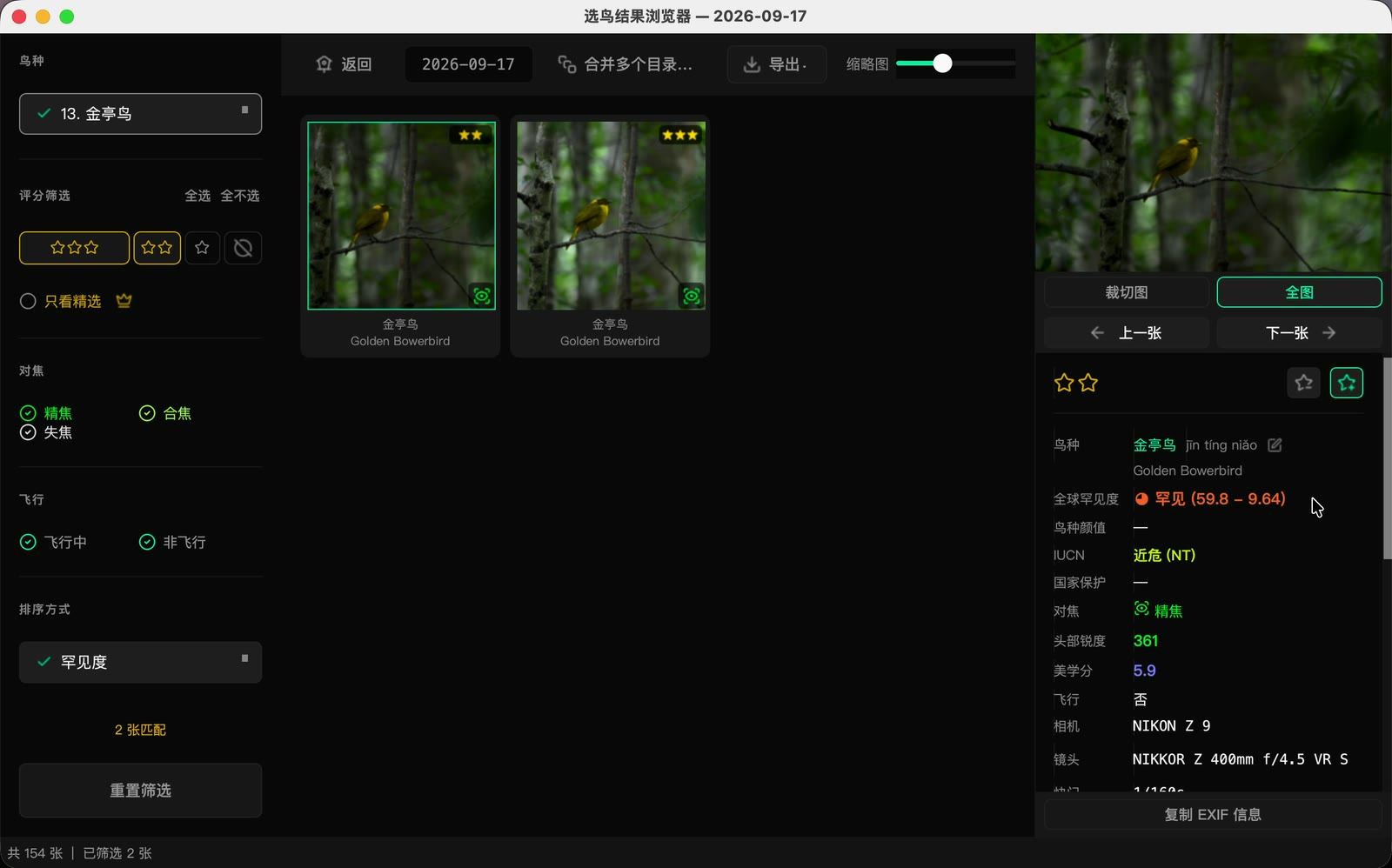
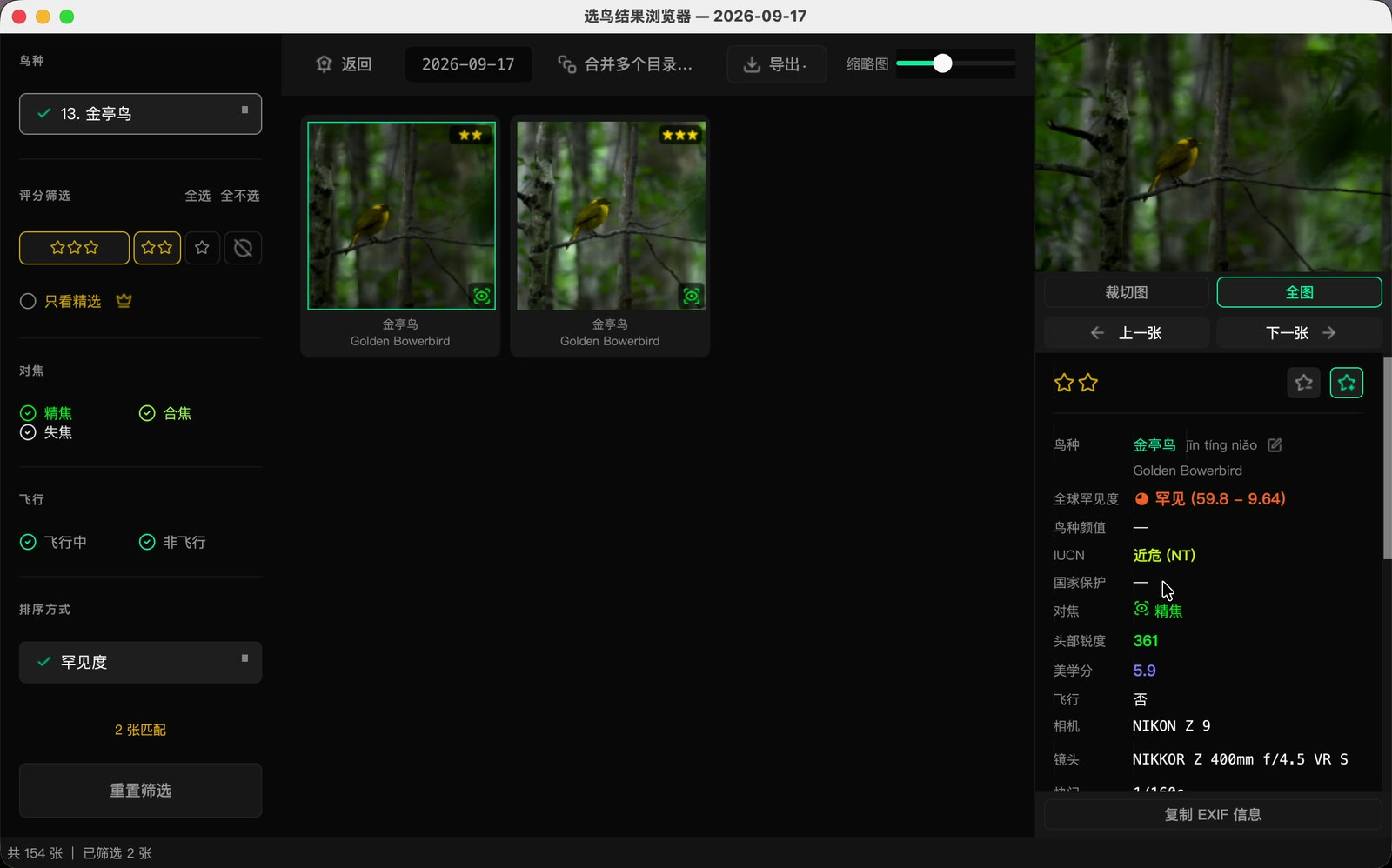
IUCN 是世界自然保护联盟的红色名录等级,例如金亭鸟是近危,小掩鼻风鸟是易危。受威胁鸟种的罕见度有保底分:易危至少 60 分,近危至少 45 分。
再往下的 国家保护 显示中国的保护级别。
IUCN is the Red List category — Golden Bowerbird is Near Threatened, Victoria’s Riflebird Vulnerable. Threatened species get a rarity floor: at least 60 for Vulnerable, 45 for Near Threatened.
National protection below shows the protection level in China.
对比一下在澳洲到处都是的利氏吸蜜鸟,全球罕见度只有 6.5 分,属于常见。
Compare Lewin’s Honeyeater, which is everywhere in eastern Australia: global rarity 6.5, Common.
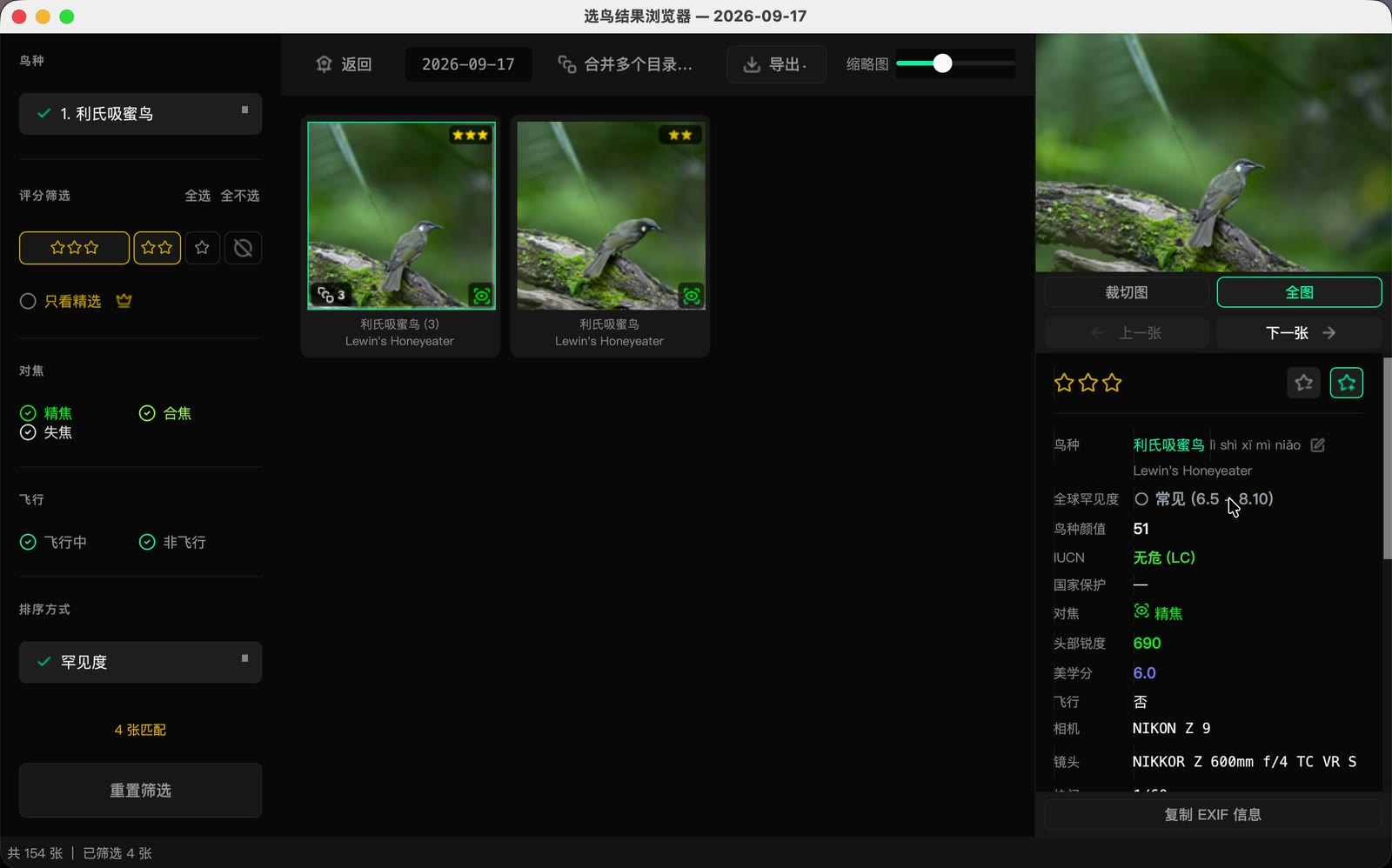
鸟种颜值来自公民科学项目 iRateBirds,几千人给上万种鸟的长相打分。它说的是 这种鸟本身 好不好看,与这张照片拍得好不好无关。
按鸟种颜值排序时,带皇冠的精选照片始终置顶,其后是颜值最高的鸟种。
Species appeal comes from the citizen-science project iRateBirds, where thousands of people rated the looks of over ten thousand species. It describes the species, not how good this photo is.
Sorting by appeal keeps crowned Picks on top, followed by the best-looking species.
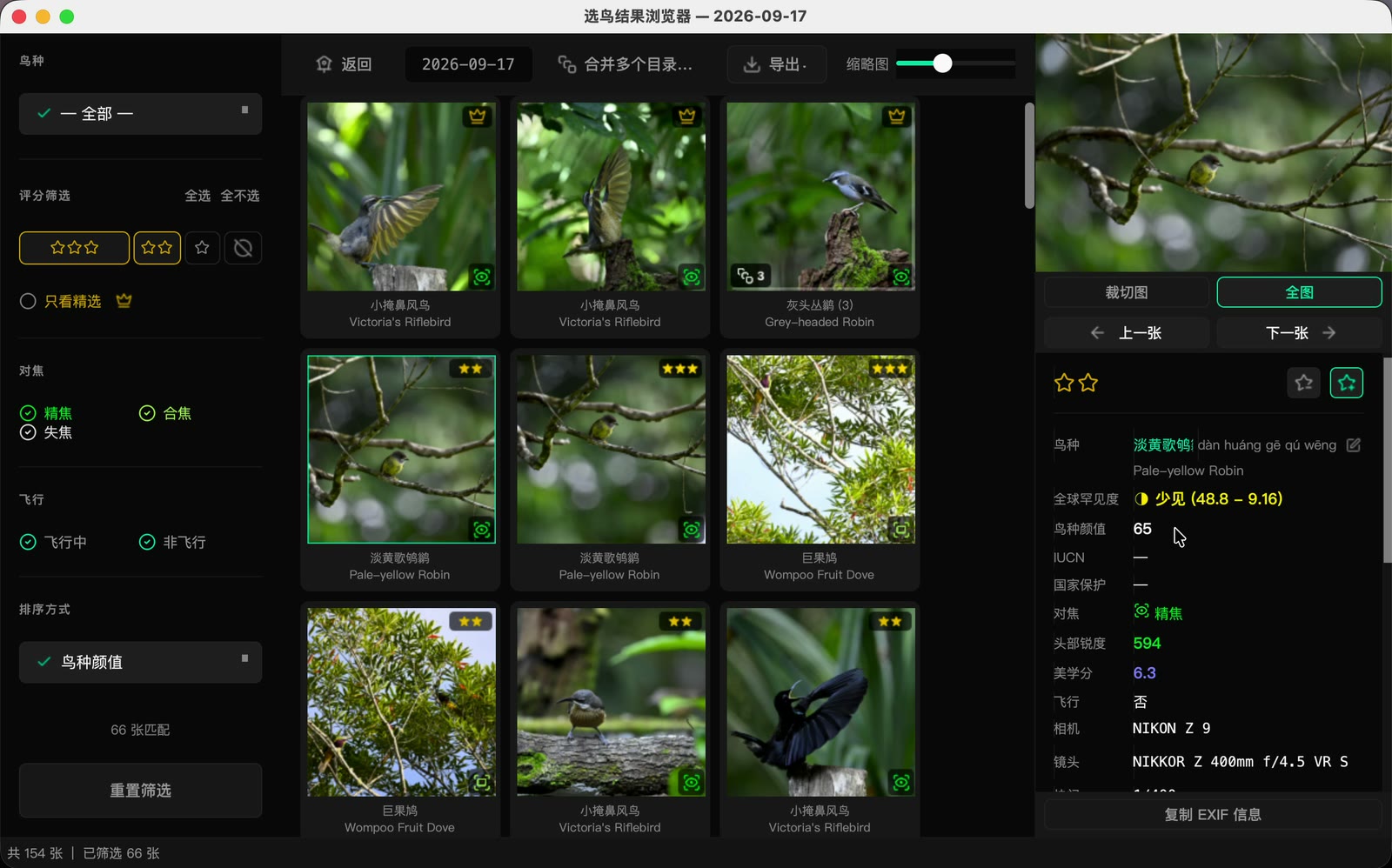
罕见度、保护等级和颜值都 不会改变照片评分,只是帮你排序和挑选。Rarity, conservation status and appeal never change a photo’s rating; they only help you sort and choose.